May my exploration of faith be a blessing to others.

Saturday, September 12, 2015

Time to Become a Catholic

St. Mary's Catholic Church, Plum Bayou, Arkansas
via Wikimedia Commons
For anyone considering a conversion to Catholicism, this is the time of year to start getting serious. Unlike many other faiths and other Christian denominations, the Catholic Church does not accept new members throughout the year. Instead, each Catholic Church launches a program in the fall called RCIA, which stands for Rite of Christian Initiation for Adults. This program, led by one of more leaders from your local church, brings you together with others from the church who are considering Catholicism, too. Over the course of about six months, leading up to Easter weekend, you  will learn about various aspects of the doctrines, traditions and rituals of the Catholic Church. During this time, you will also receive a lot of support to help you on your faith journey. You may stop participating at any time, or if you are not yet ready to make your profession of faith at the end of the time, you may continue your exploration and make your profession later. (Read my post: So, You Want to Be a Catholic, Step One)

Maybe you are not that far along in your decision. Maybe you need to learn a bit more before you start down the RCIA path. That's perfectly okay. Unlike some other faiths, the Catholic Church is not heavy-handed about conversions. You are not likely to be asked to make a decision at the end of every service as happens elsewhere. The Catholic Church really encourages people to think about the decision--just as the Catholic Church invests a lot of prayerful study and consideration into its decisions about everything. As my Deacon said, the Roman Catholic Church acts in Roman time, and if you've ever been to Rome, you'll understand what that means. Things there are not as rush-rush busy as we Americans are accustomed to in our daily lives!
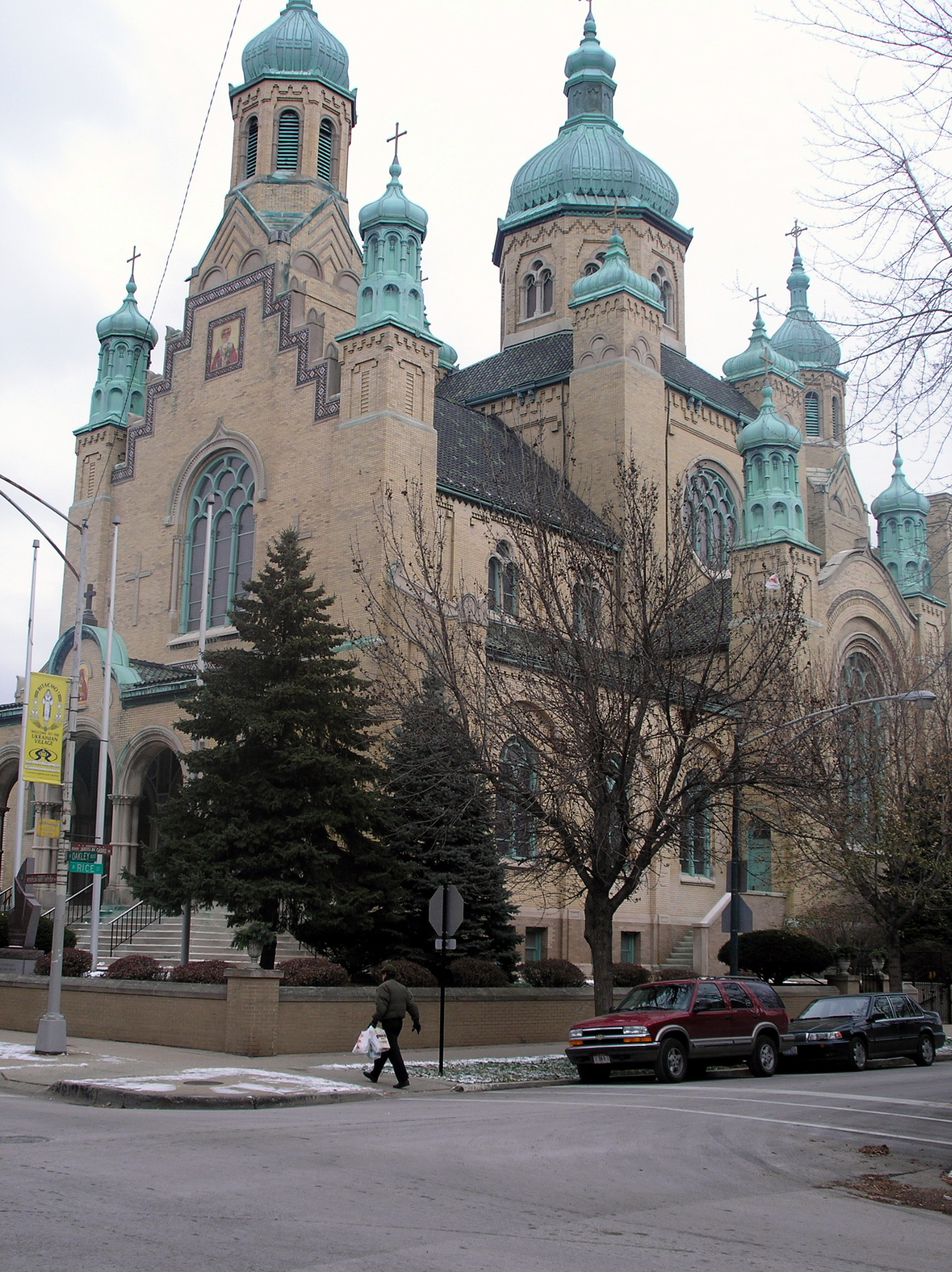
Holy Name Cathedral, Chicago, IL
via Wikimedia Commons
So, your actual first step really should be finding the parish and the Mass (which is the equivalent of the services you may be used to in Protestant churches, except the Eucharist--or Communion--is always included) where you feel most comfortable. The parish is the faith community centered around a particular church. Some are small while some are very large. Some have very contemporary architecture and design while others are extremely historic and ornate. If you live near a Cathedral, which is the home parish of the Bishop or Archbishop, or a Basilica, which holds special privileges granted by the Papacy, you will likely find it to be very ornate.

There is also a lot of variation among the Masses, even within the same parish. For instance, there are four Masses each weekend in my Parish. The Saturday afternoon Mass is very traditional with organ music and very little congregational singing and a traditional cantor to lead the responsorial parts of the service. Early Sunday morning, we have a traditional Mass conducted in Spanish, followed by another slightly more contemporary Mass with more singing and a simultaneous children's church. Then on Sunday evening, we have a very contemporary Mass; instead of organ music and cantor, there is a folk-style band and choir and a lot of congregational singing.


If you live in an area with few Catholic churches, you may not have a lot of choices, but if you live in  a larger town or city or town, you will likely find a lot of variety. There may be Masses offered in a variety of other languages, including Latin! You may find many different styles of music. You may also find a variety of pastoral styles. The smallest churches may have only one priest to deliver the homily (like a sermon). While bigger ones may have a deacon or another priest who will sometimes present the homily. In my Parish, our priest tends to tell a number of short illustrative stories that link the scriptures to our contemporary lives, while our deacon always opens with a joke and then provides a lot of historical, cultural, and broader scriptural context. The largest churches may have several priests and deacons.
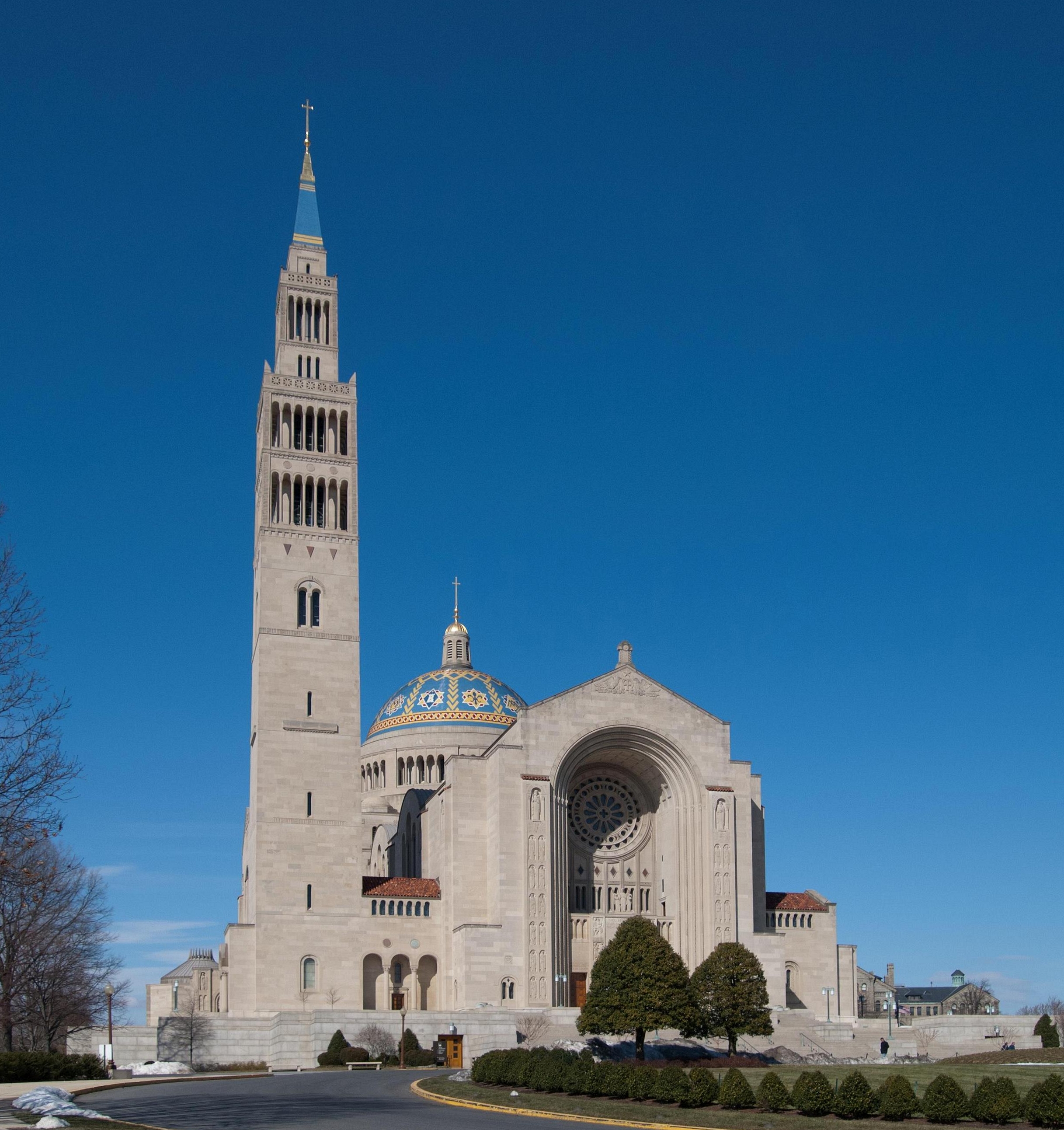
Basilica of the National Shrine of Immaculate Conception,
Washington, D.C.
via Wikimedia Commons


So, if you are fortunate to live near a few Catholic Churches, you may wish to visit  more than one and sample the Masses at different times to determine which one helps you feel closer to God. No matter which you choose, you are likely to find a diverse congregation and a nice welcome. While many so-called "cradle Catholics" are not familiar with the evangelical and proselytizing style of many Protestant churches, that doesn't mean that they are not excited to see you. So, don't be put off if you do not receive a muffin tray or follow-up welcoming phone call like you might have seen done elsewhere. Catholics are just not starting to be more "invitational" in their style--it is a particular goal of Pope Francis that they be more engaging in reaching out and welcoming in. They really do want you to feel welcome and they really are glad you are there, but some of them may be just a little "shy" in their demeanor. Many parishes have a welcome table or other resource for visitors and newcomers, so stop by there, or feel free to talk to any of priests, deacons, sisters, or parish staff with any questions you may have. I have found that the religious sisters are particularly lovely and excited to see new faces--if you are looking for a hug, a sister is the best person to find! (However, since very few of them wear habits any more, you might have a bit of trouble recognizing them. They will be dressed modestly, with simple hairstyles, very little to no makeup and sensible shoes! Some may wear wedding rings as "brides of Christ," depending on their Order.)

To help you find the Masses near you, I recommend checking out the Mass Times web site. You can find out the locations, times, basic styles and languages of Masses in the area. This site is also a great tool for finding a Mass when you are traveling.

Tuesday, March 4, 2014

Pancakes and Ashes

For all of my fellow new Catholics and those exploring Catholicism, you may not know that we are about to enter the most important season of the church's liturgical year. If you are used to all of the hoopla of Christmas and just a little celebration on Easter Sunday, you may be surprised by everything on offer for the next several weeks! This is the BIG GAME! In fact, Christmas was a minor observation for much of the church's history.

Today, in a sense, is the kick off. I'm sure you have heard of Mardi Gras--which probably makes you think of New Orleans--or Carnival--which may make you think of Rio. The celebrations in both of these places and elsewhere are based on the same pre-Lenten observation called "Fat Tuesday" or "Shrove Tuesday." This is the day before Ash Wednesday; it is the last day to prepare yourself for the 40 days of fasting and penitence of lent. So, you "shrive" yourself to get ready for confession on Shrove Tuesday. Since Lent also includes fasting, people have traditionally feasted the day before, hence the name "Fat Tuesday," which translates as "Mardi Gras" in French. Interestingly, the word "carnival" derives from the Latin for "farewell to meat," another nod to the fasting period of Lent

In my parish, we have a pancake supper on Mardi Gras for the community. Lots of fun and an excuse to eat something I wouldn't normally have for dinner!

And that leads us directly into Ash Wednesday, the first day of repentance in the Lenten Season. On this day, Catholics are asked to abstain from meat, fast, and contemplate one's transgressions. It is not a Holy Day of Obligation, so you are not required to go to church, but if you do, you may go forward to have a cross of ashes placed on your forehead and blessing said over you. The ashes symbolize are ongoing repentance and the brevity of our earthly lives--from ashes to ashes. The ashes come from the burning of the palm fronds used on Palm Sunday the previous year. These are sprinkled with Holy Water and are incensed.

After getting your ashes, you are allowed to wash them off immediately or you may choose to wear them for the rest of the day as a sign of your Christian faith. Last year, I wore mine to play team trivia at a local restaurant. It definitely drew some attention!

I'll post some more about Lent as we go along. In the meantime, enjoy your Mardi Gras, and pass the syrup.

Sunday, December 8, 2013

Christ(mas) is coming!

The Advent wreath includes one candle for each Sunday
during the season. Three are purple, but the third is rose-
colored to mark the halfway point until Christmas

Today is the second week of Advent. For those of us who did not grow up in the Catholic Church or in the more "high church" Protestant faiths, this is a new concept. For me, observing my first Advent since being confirmed as a Catholic, this is a very exciting time.

Certainly, I grew up with the Christmas story of the little Baby Jesus laid in a manger, visited by Three Wise Men, heralded by angels, and all of that. I have caroled in the cold and participated in live manger scenes--I've played every role except the Baby Jesus; and I must say that I make a rather handsome Joseph.

So, it's not that I didn't know the "reason for the season," despite all of its secular trappings from evergreen trees to jolly ole elves sliding down chimneys, from white elephant gift exchanges to dropping coins in red kettles after spending hundreds of dollars on gifts for everyone I've ever known.

But, this idea of Advent is a new one for me. The liturgical year in the Catholic Church begins with this period of anticipation. Christ is coming and we must prepare for his arrival. Just as I have traditionally prepared my home with lights and baked goods, colorful packages and Santa figurines, I now am preparing my heart and my spirit for the "arrival" of the King of Kings. Of course, Jesus is not literally arriving on Christmas Day. (Scholars even seriously doubt that he was born in December.) He is always with us, but during this very special season, we recall that God became man in order to bring us all into eternal communion with him. As Catholics, Advent is also a time to remember that Christ will come again.

These four weeks of waiting and preparing that make up Advent are the true richness of this special time of year. There are many ways to observe this period of increased prayerfulness, fasting, and good works. In addition to my usual generosity to family and friends, I have greatly increased my charitable giving, buying gifts for elderly shut-ins and less advantaged teenagers, offering my contributions to other large-scale efforts like Toys for Tots and different canned food drives. Although fasting is not an option for health reasons in our home, we are observing leaner meals and offering greater appreciation for them. And, of course, we are using an Advent devotional that was provided by our parish. I'm also planning to find ways to mark the Twelve Days of Christmas, from Christmas Day through Epiphany.

For ideas about how you can expand your observance of Advent, About.com offers some helpful information. The U.S. Conference of Catholic Bishops also offers many resources, including a blessing for your Christmas tree.

Tuesday, May 28, 2013

So, You Want to Be a Catholic? Step One

I'll be honest. The Catholic Church does not make the conversion process easy. Just finding information about the process can be even more challenging.

Having sampled several faiths and discussed many others, I know that many Protestant churches simply ask for a profession of faith. In the more evangelical branches, they may expect you to come to the altar and accept Jesus as your savior. Some may expect, but not necessarily require, that you be baptized. Sometimes, joining a new church may take only a few moments.

Not so with the Catholic Church, which asks you to go through a process over the course of about six months leading up to Easter. That means, you have to be ready to get started in the fall and ready to be confirmed in the spring. No midsummer revival meeting conversions here.

So, how do you get signed up? I consider myself fairly savvy, and I have been Googling since the beginning, but I must admit that finding information about converting was a challenge for me. I tried my parish's web site. Turns out "Catholic education" was about children. Searching "Catholic conversion" connected me to many sites and blogs about others who became Catholic but did nothing to set me on the right path. Sure, I could have asked someone at the church I was attending, but I was brand new in town and I'm actually a bit introverted. (I don't order pizza delivery because I'd have to talk to the delivery guy--ironic considering that I'm in the relationship business, but that's a story for another day.)

Finally, one day last fall, I caught an announcement at the end of mass that the new candidates were having a meeting and I worked up enough courage to ask the Sister what she was talking about. It was then that I discovered RCIA. I had seen those initials on the web sites and in the newsletter, but I had absolutely no idea what they meant--Roman Catholic Intelligence Agency, perhaps?

As it turns out, RCIA stands for Rite of Christian Initiation for Adults. Even had I seen it spelled out, I don't know if I would have understood that this was for new people. It could have meant that's how you become a nun or a priest or even a member of the Knights of Columbus from all that I could tell. But, now that I finally knew what to look for, information was plentiful.

Here are the basics you need to know about RCIA to get started:

Each parish, which is centered on the church you attend, should offer the program starting in the fall. Although the length of the process can vary, most parishes have a set timetable leading up to the night before Easter. That timetable is governed by several key moments of ritual that are determined by the collection of parishes that make up your diocese, which is led by the Bishop or Archbishop. During this period, potential candidates are expected to attend mass once a week (although you are not allowed to partake in the Eucharist, which you know better as Communion) and to attend a weekly session with the other interested people in your parish. This session is used to help you understand more about the beliefs, tenets, and rituals of the Catholic Church, and to help you prayerfully explore whether this is the right path for you. The sessions are usually led by a priest, deacon or religious (the Catholic term for nuns, monks, friars and others who take vows but are not part of the clergy.) The groups may be small, so you get a lot of attention. My group included five women of varying ages and one young man. It just depends on how many there are in your parish at that time. Faithful attendance is not strictly required, but it is highly encouraged. You may also have one-on-one meetings with the leader of your RCIA program and/or your parish's pastor and/or deacon depending on how your parish prefers to operate.

Around Advent--the weeks before Christmas--a diocese-wide service is held for all of those who wish to proceed. If you have not previously been baptized, you will become a Catechumen and will begin to prepare for baptism. If you have been baptized, you will become a Candidate. By this point, you will have been asked to select a strong Catholic to be your sponsor. The sponsor's role is help provide you individual guidance, to present you to the parish and to take part in the forthcoming rituals with you.

After that, you will continue your weekly sessions and mass attendance, but you will also become a bit of a "star" within your parish. You will be formally presented in front of the congregation on a couple of occasions. If your church has several weekly masses, you may be presented at all of them. Then, you're big shining moment comes on Holy Saturday, the night before Easter, when you finally partake in the Eucharist.

The process is a journey that will enable you to explore what you believe and why you believe it. Ideally, there is never any pressure to complete or continue the process. If you want to stop or you want to keep exploring for a longer period of time, you are welcome to do so. In my parish, I felt warmly embraced and welcomed. I enjoyed learning more about the church, and I grew a lot as a person and as a child of God.

Perhaps it did take less time for me to join the Protestant churches to which I previously belonged, but I never felt as secure in my faith, as assured of my decision, or as close to my Creator.

Sunday, March 31, 2013

My Faith Journey

My heritage, like that of many Americans, is a mix of ancestries. The surnames of my great-grandparents derive from Sweden, Germany, Wales, England, Ireland, Switzerland and Scotland. All northern European. All Protestant. Among them are Presbyterians, Baptists, Methodists, Quakers and more.

But, here I am today, Catholic. On this, my first full day as a Catholic, I realize that I am the first Catholic in my family for generations, centuries perhaps. Is this a betrayal of family? A dishonor to my heritage? I ask myself on this Easter Sunday, have I made the right choice?

Then, I remember last night, after I drank from the cup, the first face I saw among the congregation waiting to receive me into the Catholic Church was not a Catholic face at all. It was my mother's. Her eyes were filled with tears of joy, and my father next to her beamed with pride. The love and support they have always provided was as real in that moment as it has ever been.

I do not pretend that they fully understand my choice, but they understand my reasons. They have seen me succeed and they have seen me fail. They have watched my struggles and longed to heal my wounds, tried to protect me from harm. That is what parents do. Throughout my life, I have been seeking peace and purpose. I sought at times through a variety of faith traditions. I sought at times by questioning God's existence and by intellectualizing against religious doctrines.

As a self-proclaimed geek who, at 12 years old, read the entire World Book Encyclopedia (except L, somehow that volume had disappeared years earlier.), I knew the basic tenets of Catholicism, just as I knew those of Islam and Judaism. As a teen, my first real encounter with Catholicism had been a funeral, and I found the Hail Marys sad--the prayers made me feel distant from God. It wasn't until I heard actress Nell Carter sing the Ave Maria, that I understood the comfort of the prayer. From that day forward, through two decades, I always prayed the Hail Mary when frightened or anxious. It got me through several iffy airplane takeoffs and landings!

In college, I was asked to take an early-admission student to mass each week. She was too young to drive herself, and so I went with her. Then, I went without her. Something kept drawing me back. I loved the bells during the Eucharist. I loved the moment when everyone, stranger and friend alike, wished each other peace.

Later, I moved to another city, and I adopted the Methodist tradition, but I grew further and further from God until about 14 months ago, when a beloved friend asked me what I was doing with my life. For years, I had been praying daily and seeking peace, but I had not entrusted my life to God.  I realized that I had been making the wrong choices in my life for all the right reasons. I had tried to be "good" but I had lost my way. I had sought to control everyone and everything in my world. Nothing had turned out the way I thought it would. I was "successful" in many ways, but at a great cost to myself and my spirit. I felt desperate. Lost.

I began to pray for God to lead me in the direction I should go, and I begged him to make it very clear so that I could understand. The transformation began. The next Sunday, I found myself in a Catholic church. My soul felt healed. I went to church, not because I was "supposed to", but because I really had to. The peace and joy, comfort and fulfillment, the purpose that I found there, I had never found anywhere else.

In the last year, nearly every element of my life has changed.  I will not tell you it was easy. I will not tell you there were not moments of great anxiety. I will not tell you that there were no tears. But, I will tell you this: at every moment, I knew that God was showing me the path I should follow, that he was laying it out before me as clearly as I had asked Him to, and that the choice to follow it was mine to make.

I have not reached the end of this journey by any means, but God has blessed me with all that I need and with more than I could have expected. Each day is a new discovery.

Perhaps, if any of my grandparents were still alive, this path would have been even more challenging. They would have questioned me more intently than my parents. My Protestant Irish and British ancestors no doubt suffered in the religious conflicts of their homelands. More recently, my Quaker grandfather spent his boyhood in the Cuban countryside where he witnessed greedy abuses by the local priesthood that he felt helped impoverish the people and seeded the revolution there.

But, I did not choose the Catholic church because of its history. In many ways, I chose it because of my own history. At some point, in each of those Protestant lineages that led to me, someone stood up for his or her faith. Someone made the decision to worship in the way that brought them closer to God. Perhaps it is ironic that the faith that has brought me closer to God is one that caused my ancestors ultimately to seek the New World. God, as they say, works in mysterious ways. Today, I pay homage to my family, who held firmly to their faith. Today, I stand on their shoulders as I return my life to God. Like my parents, they may not have understood my choice, but I know they would support my right to worship as I choose.